TARTAN
A sequence that mirrors
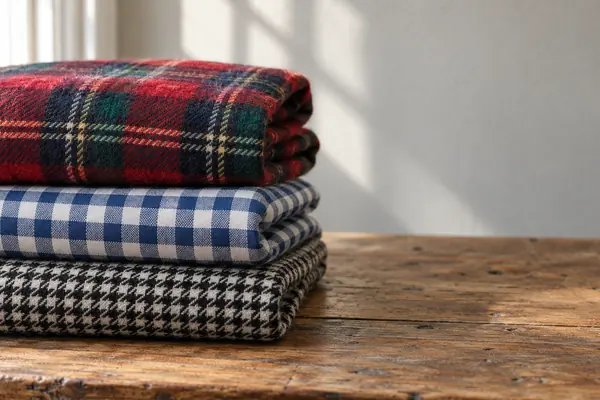
Scots law defines tartan as two or more alternating coloured stripes combining vertically and horizontally into a repeated chequered pattern.
How a sett works doodlechecks
HOW THE PATTERN IS WOVEN
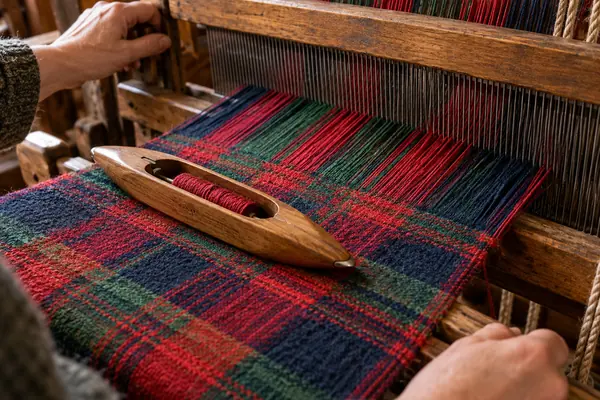
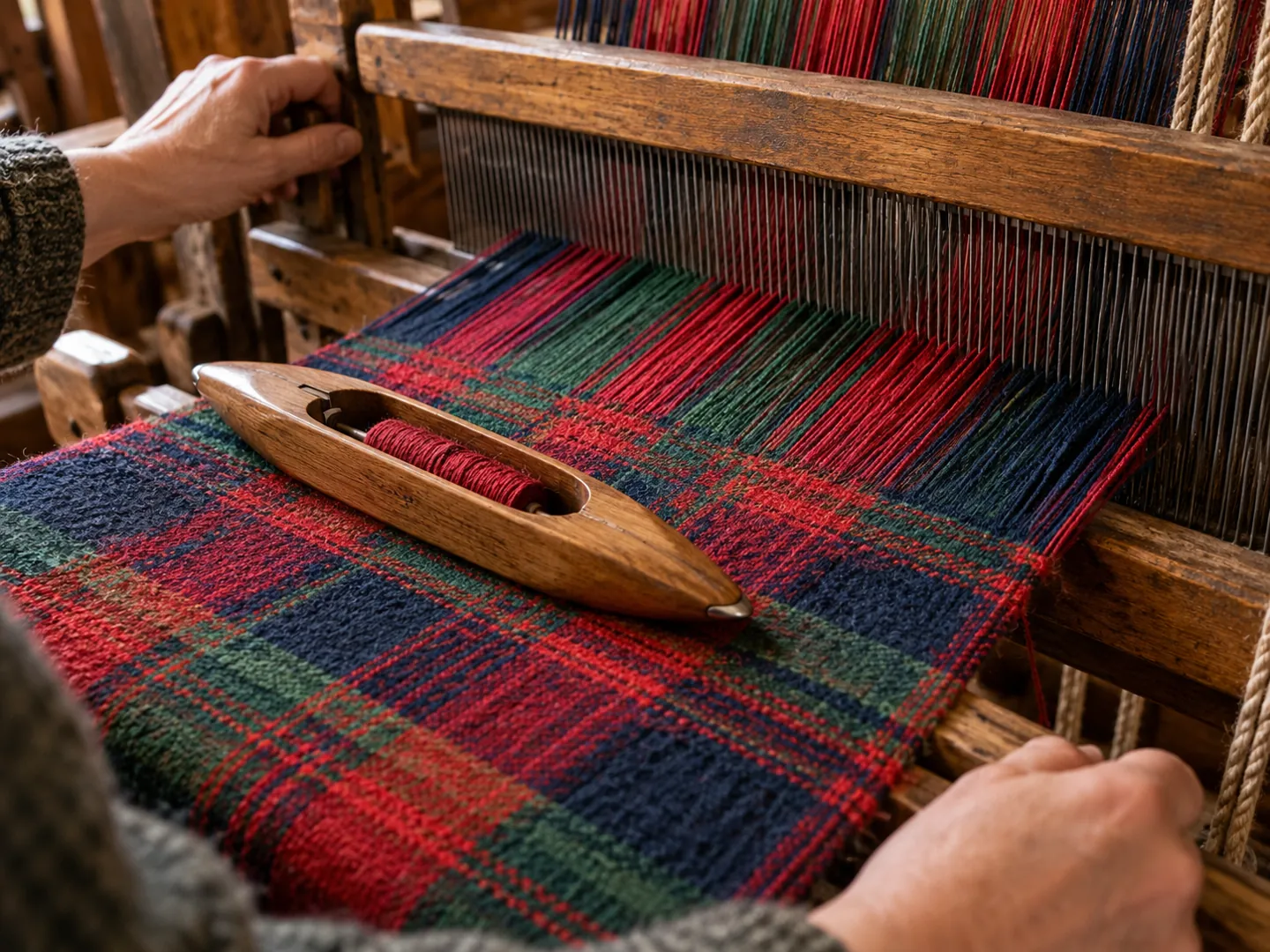
A check is not printed on. It is woven in.
Tell your checks apart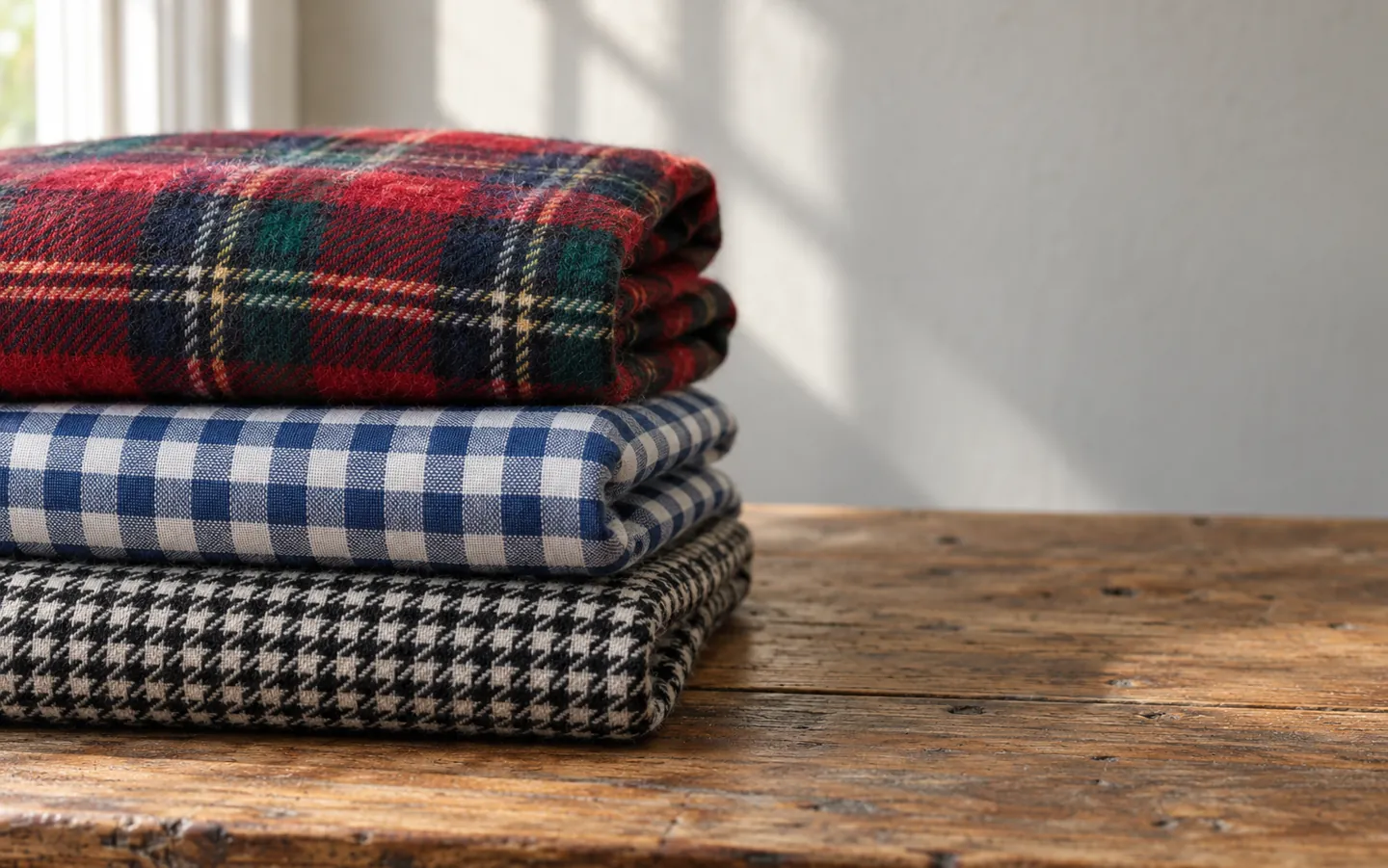
WARP × WEFTthe same stripes, both ways
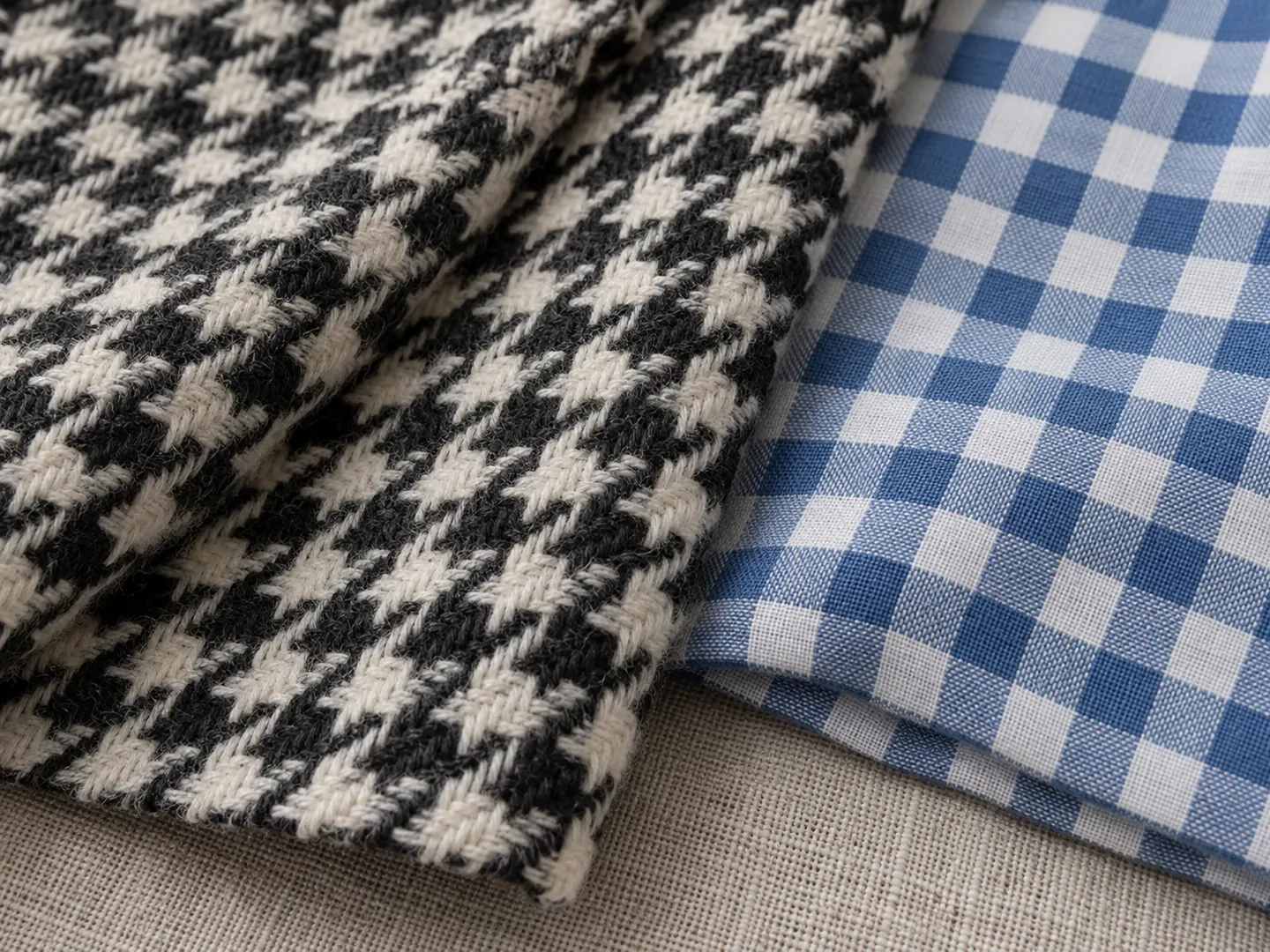
Run coloured stripes along the warp, repeat the same stripes across the weft, and wherever they cross a new shade appears. Gingham, houndstooth and tartan are all versions of that one idea.
Updated
THE SHORT ANSWER
The weave and the stripe sequence
decide which check you get.
TARTAN
Scots law defines tartan as two or more alternating coloured stripes combining vertically and horizontally into a repeated chequered pattern.
How a sett worksGINGHAM
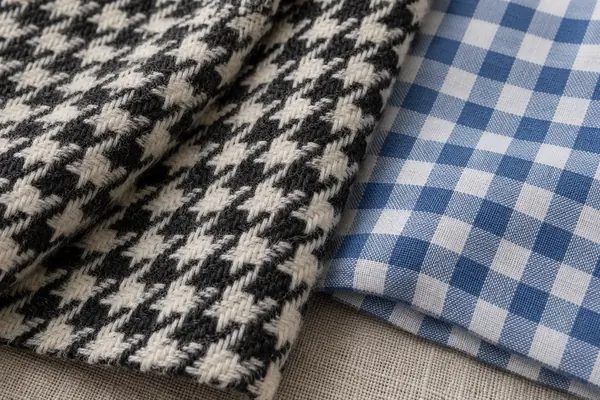
Gingham is a balanced plain-woven cotton, usually one bright colour with white. Where the coloured stripes cross, the darkest squares appear.
Compare the checksHOUNDSTOOTH
The traditional houndstooth uses bands of four dark and four light threads both ways, woven in a 2:2 twill that gives its jagged edges.
How old it isTELL YOUR CHECKS APART
Pick a check to see how it is built. The bar shows how complex its stripe sequence usually is.
Based on the Scottish Register of Tartans Act 2008, V&A Dundee and reference descriptions of each weave.
TWO DATES WORTH KNOWING
One date for the oldest true tartan in Scotland,
one for the oldest houndstooth found so far.
1500–1600 AD
Most probable date of the Glen Affric tartan
Radiocarbon testing of a tartan found in a Glen Affric peat bog gave a range of 1500 to 1655 AD, most probably 1500 to 1600, making it the oldest known true tartan found in Scotland.
OLDEST TARTAN · V&A DUNDEE
1500–1200 BC
Date of Bronze Age houndstooth textiles
The oldest Bronze Age houndstooth textiles found so far come from the salt mine at Hallstatt in Austria.
OLDEST HOUNDSTOOTH · HALLSTATT
The Glen Affric piece measures around 55 cm by 43 cm. Dye analysis by National Museums Scotland confirmed indigo or woad in the green and found no artificial dyes.
READING A THREAD COUNT
A tartan is recorded by counting the threads of each colour in its sett. The count captures both the colours and the width of every stripe.
Each colour gets a short code, such as K for black, R for red and Y for yellow.
A count like K4 R24 K24 Y4 means 4 black, 24 red, 24 black and 4 yellow threads.
In a symmetrical tartan the sequence reverses at the first and last colours, the pivots, so only half the sett needs writing.
The count can be reduced in proportion, so the same tartan fits a necktie as well as a kilt with a sett of about 6 inches.
THE TARTAN REGISTER
The Scottish Register of Tartans Act 2008 set up a register, kept in electronic form, to preserve tartans and be a source of information about them. Anyone may apply to register a tartan.
An application must include a coloured picture of the tartan, a description of its colours, thread count and sett, and its name. The Keeper must refuse a design that is not a tartan, or one that is the same as, or too similar to, a tartan already registered.
Questions
In American English, plaid usually means tartan. Tartan is cloth with crossing horizontal and vertical bands in several colours, forming repeating patterns called setts.
The sett is the pattern of a particular tartan: the series of stripes, at set widths, that cross at right angles. It can also mean the written thread count that records it.
Nobody is sure. Suggestions include the town of Guingamp in Brittany, a route into English through Dutch, and the Malay word genggang, meaning striped.
Highland dress was restricted under the Dress Act 1746, after the Jacobite rising of 1745. The ban lasted about two generations, and the Act was amended by the Use of Highland Dress Act 1782.
Under the 2008 Act any person may apply to the Keeper of the Scottish Register of Tartans, with a fee. The name must not already be on the Register, and the design must not be too similar to an existing tartan.
ABOUT THIS NAME
doodlechecks.com is part of the DoodleSale portfolio. It isn't in an auction right now, but you can ask about leasing it.